Little Brothers Friends of The Elderly (BFFE)
Is an organization that strives to end loneliness and isolation among the elderly. They bring together volunteers and pair them up with elders to foster lasting friendships.
Our challenge:
The organization has been having a hard time connecting elders with their substantial volunteer base. Since these folks are often in the isolation of their homes, they are often hard to connect with; we needed to draw elders out of isolation and help connect them with community members and LBFE’s substantial volunteer base.
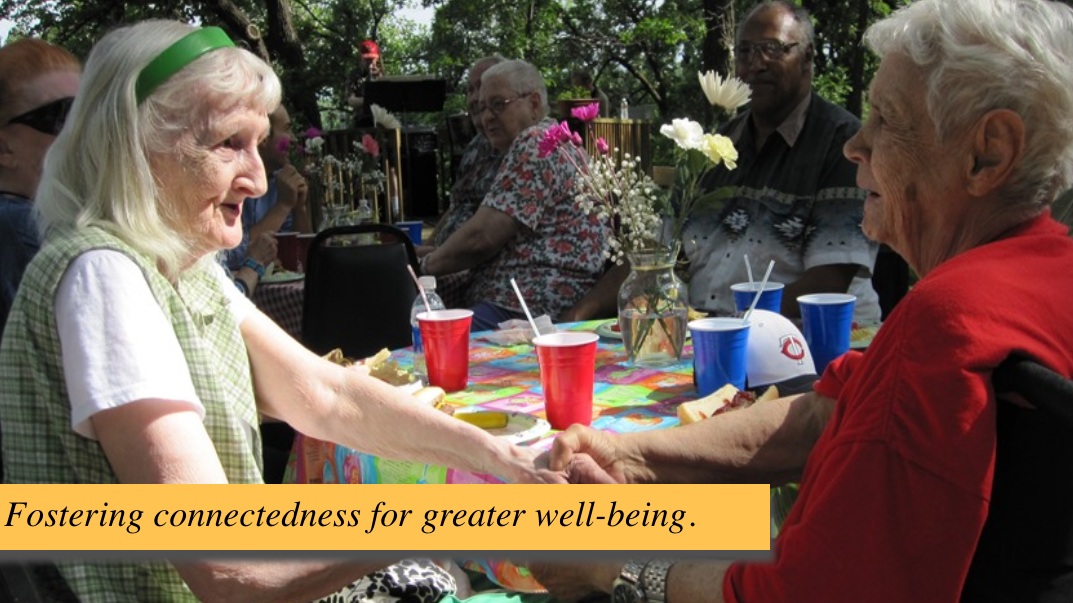
Friendships hold intrinsic value in all of our lives. With this opportunity we were determined to find a strategy to make it easily accessible to the elderly in Longfellow.
Scope:
Michael Haas, the manager at Little Brothers, shared his passion for this organization and gave us an opportunity to come up with a strategic, real-world solution to help recruit more elders to join the program.
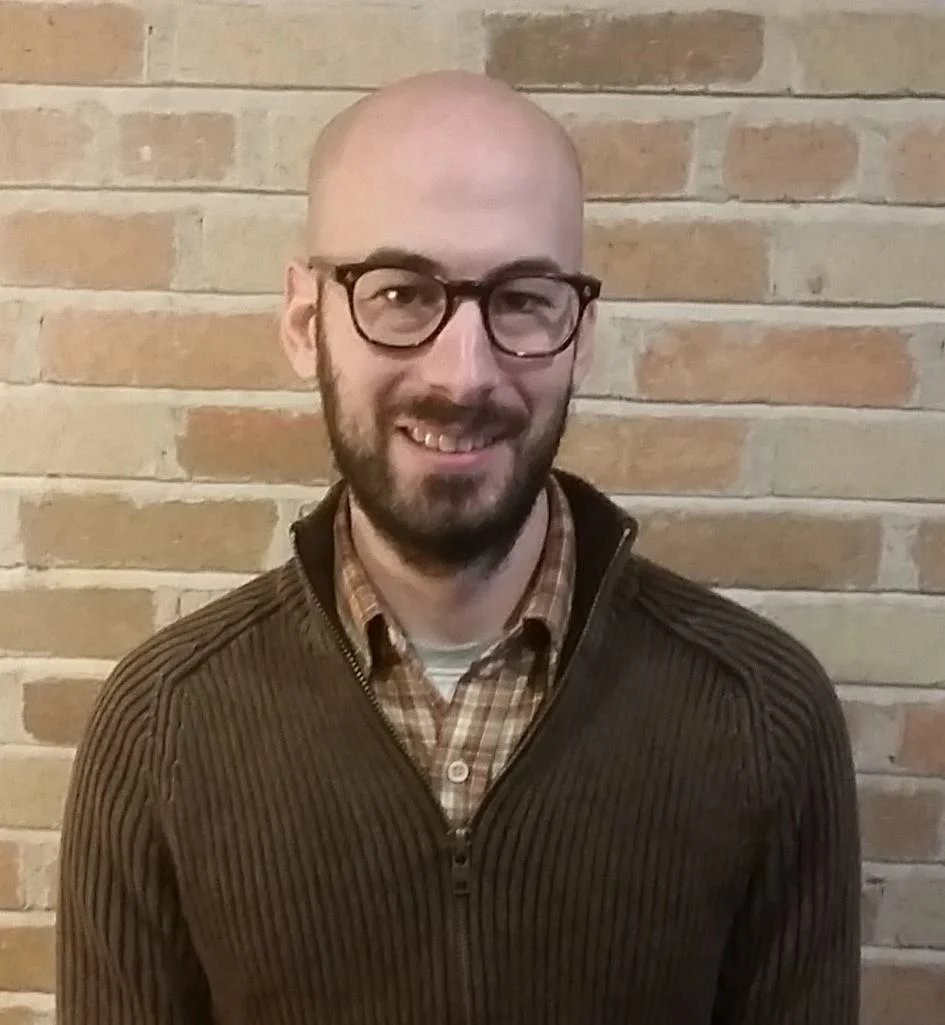
“Our goal as an organization is to end loneliness and isolation among the elderly” —Michael Hass
Research:
To better understand the community and the issue of loneliness and isolation in older generations, we looked into previous studies to learn the best way to engage people struggling with isolation and the effects of it. Throughout the discovery phase, we delved into secondary research to understand sustained communities and elder inclusivity. Denmark being rated the happiest place to live with strong generational integration, we discovered that people are happier towards the end of their life when they are engaged in a more age-diverse community.
Based on these findings, we designed an action-oriented strategic plan to unify the Longfellow community by getting locals involved. We targeted the neighborhood leaders by posting at coffee shops and businesses to get the word out and plan a neighborhood event that would get locals interested in a community fall leaf clean-up event.
Our goal was to ignite awareness and conversation about the mission of the organization to end loneliness and isolation in old age. In doing this, LBFE can provide a space to support new connections in the neighborhood and inspire folks to take initiative to create a more inclusive and age-diverse community.
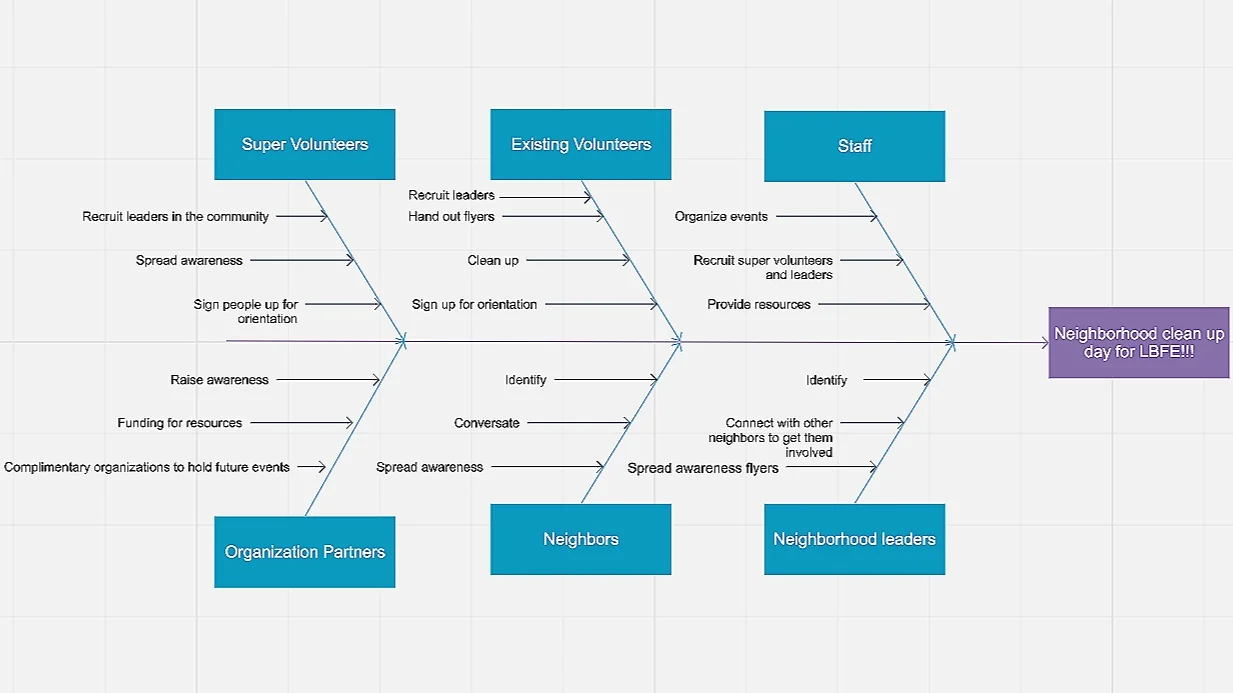
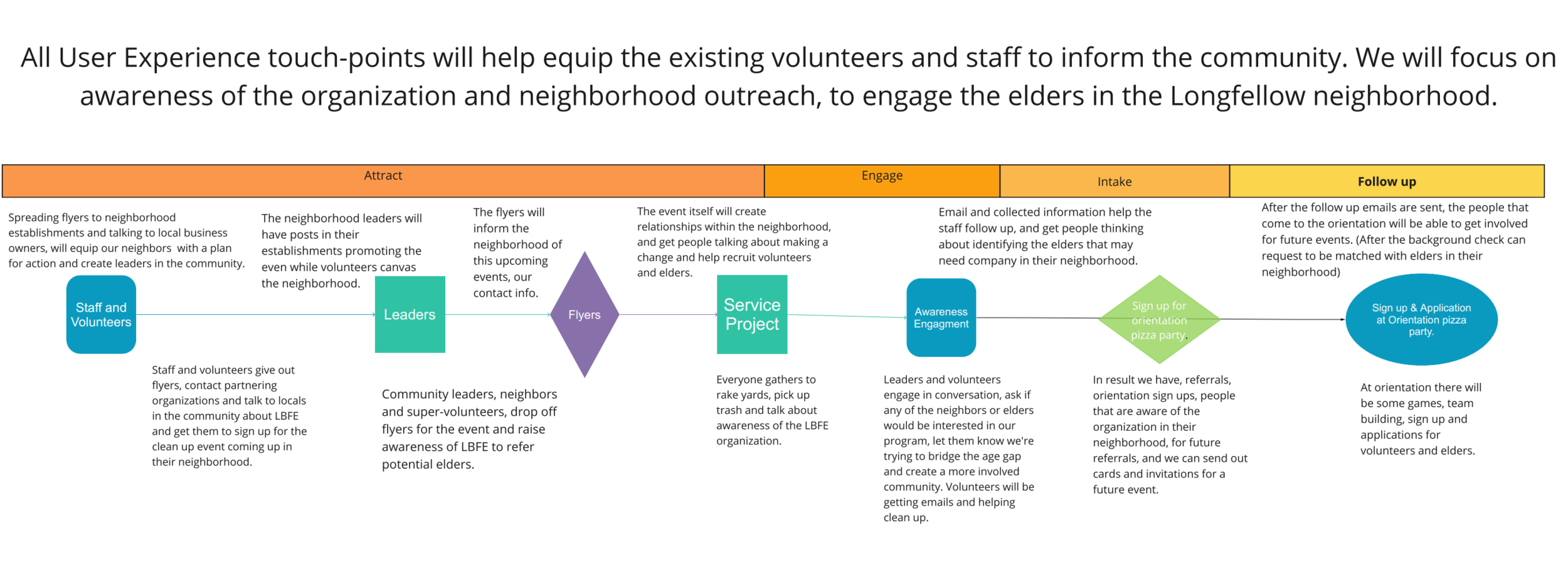
Map of tasks and people involved in coordinating the main community clean up event.
Proposed recommendations:
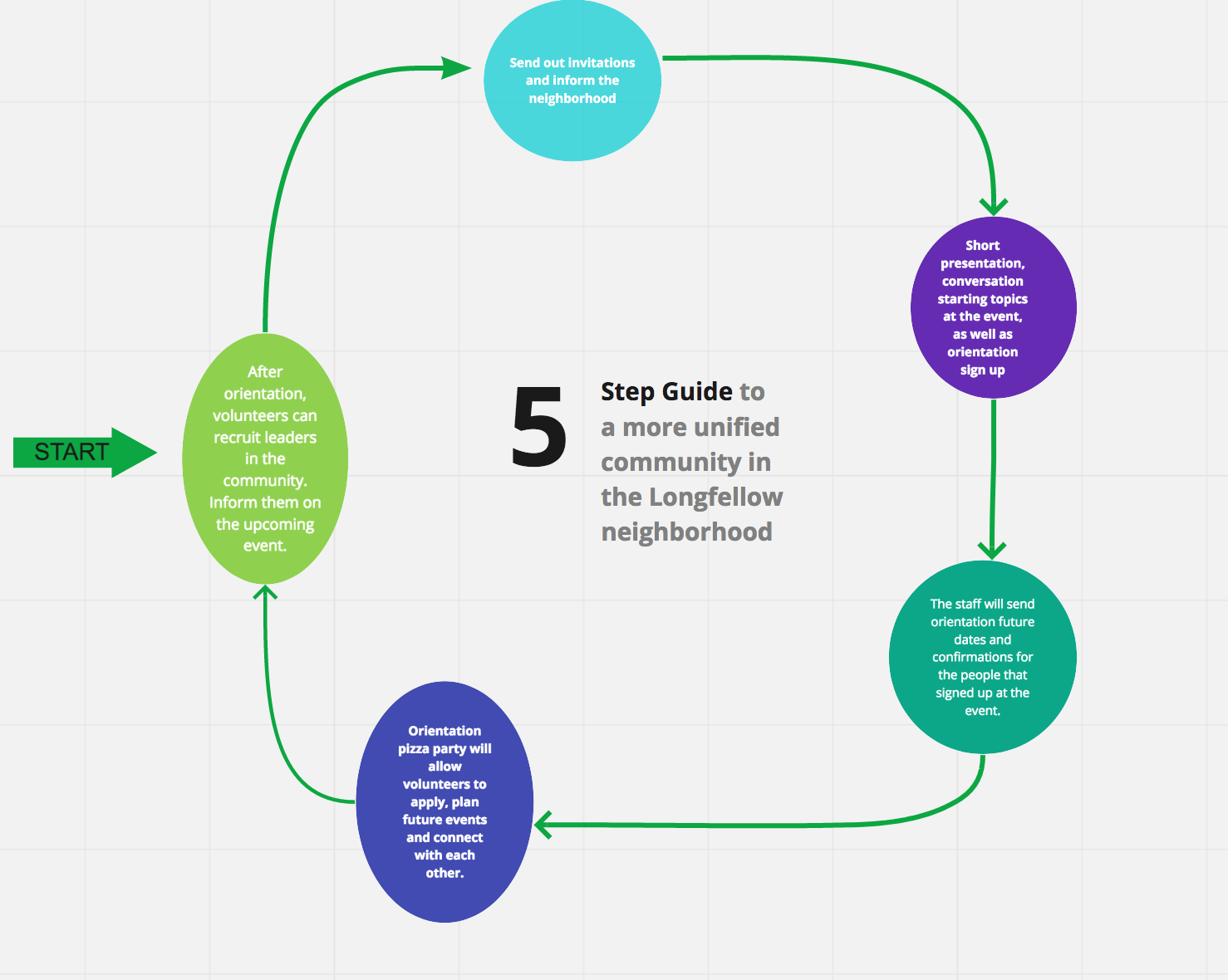
My team and I proposed a cycle of community-based events that can happen throughout the year to increase awareness and engagement for the elderly in the Longfellow Neighborhood of Minneapolis. This proposed strategy is a systemic solution for building strong communities and can be tested and applied to various locations that LBFE serves. Through volunteers and community involvement, these initiatives have been proven to foster engagement for lasting connections.
Long-term implementation:
With this strategy, we are making an effort to
bridge the age gap in the Longfellow neighborhood
get more people outside to meet
create a fun and collaborative environment
Journey map:
Presentation of proposal:
https://www.dropbox.com/home/LBFE?preview=LBFE+Presentation.mp4
Creating cyclical events throughout the year with checkpoints of follow-ups will help grow the number of connections and elder relationships. This cycle will create a sustainable way for Little Brothers to grow their network and expand their services. This approach is inclusive of all ages; we hope it works to unify the community by building an ecosystem of diverse friendships within the Longfellow neighborhood. This strategy can be applied to other locations of LBFE for social development in communities and cities across the board.